Your Body Speaks Before You Do

5 Physical Signs That Your Nervous System Is Crying for Help

Your body does not lie.

Your mind may convince you that you are “fine.” You may tell yourself that what you are feeling is just temporary tiredness, work stress, or “what everyone goes through.” But your body — your body always knows the truth.

Before you collapse, before you cry for no clear reason, before you find yourself snapping at someone you love over something small… your body has already tried to tell you, again and again.

But you did not listen.

Not because you did not want to, but because no one taught you how.

The Nervous System: The Silent Translator Between Your Soul and Your Body

Before we talk about the signs, let me explain something important:

Your nervous system is the bridge between what happens in your outer world and what you feel inside. When life feels calm and safe, your body enters a state called “rest and digest” — it breathes deeply, sleeps well, digests food properly, and feels connected.

But when stress starts to build up — responsibilities, deadlines, draining relationships, world news — your body enters “fight or flight” mode. It prepares to escape from a danger that is not actually there. And when this state lasts for months or years, the nervous system begins sending clear signals.

The problem? We have learned to silence them with painkillers, caffeine, or simply… by ignoring them.

Here are 5 signs your body may be sending you right now. Learn to read them before it has to scream.

Sign One: Your Shoulders Rise Toward Your Ears Without You Noticing

Do this now: take a deep breath and lower your shoulders.

Did you feel the difference? Were they lifted?

Most women live with tense shoulders all day without realizing it. This is not just “bad posture” — this is your nervous system in a constant state of alert. The body protects the heart and neck when it feels threatened, even if the threat is just an email you have not replied to yet.

What is your body saying?

“I am carrying more than I can handle, and I cannot find a moment to put the weight down.”

Simple exercise — 1 minute:

Sit comfortably. Lift your shoulders high toward your ears, squeeze strongly for five seconds, then release them suddenly with an audible exhale. Repeat three times. Notice how your body begins to remember what relaxation feels like.

Sign Two: You Breathe From Your Chest, Not Your Belly

Place one hand on your chest and one hand on your belly. Take a natural breath.

Which hand moved first?

If it was your chest, you are breathing shallowly — the breath of anxiety. Your nervous system believes you are in danger, so it speeds up your breathing and keeps it in the upper body, preparing you to run. And the more shallowly you breathe, the more you send your brain this message:

“We are in danger. Keep worrying.”

A closed loop that drains you without you even realizing it.

What is your body saying?

“I no longer remember what safety feels like.”

Simple exercise — 2 minutes:

Lie on your back and place a book on your belly. Breathe in slowly until the book rises for four seconds, hold your breath for two seconds, then exhale slowly for six seconds until the book lowers. A long exhale literally tells your nervous system:

“You are safe now.”

Sign Three: You Wake Up Between 2:00 and 4:00 AM

Do you fall asleep easily, then suddenly find yourself awake at 3:00 AM with endless thoughts racing through your mind?

This is not a coincidence. This timing is known in traditional Chinese medicine and is also connected to modern research around cortisol cycles. When your nervous system is in a state of alert, your body releases stress hormones at a time when you are supposed to be in your deepest sleep. So you wake up suddenly, with a racing heart and a mind that immediately begins remembering everything you have not done.

What is your body saying?

“I do not trust that tomorrow will be kind to me.”

Simple exercise — 3 minutes before sleep:

Sit on the edge of your bed and place your feet on the floor. Press your feet into the ground as if you are rooting yourself into it. Place your hands on your thighs and whisper to your body:

“Today is over. Nothing needs me now.”

Repeat for three minutes. This exercise is called grounding, and it helps close the cycle of alertness before sleep.

Sign Four: Your Jaw Is Tight, and You Grind Your Teeth While Sleeping

Do you wake up with jaw pain, a light headache around your temples, or has your dentist told you that you grind your teeth at night?

The jaw is one of the areas where the body stores suppressed emotions — the words you did not say, the anger you swallowed, the “no” that turned into “okay.” Every woman who has learned to swallow her opinion to keep the peace pays the price in her jaw.

What is your body saying?

“There are things you need to say, but you have not yet found the courage.”

Simple exercise — 1 minute:

Open your mouth as wide as you can, stick your tongue out strongly, and release a loud sound for five seconds. Yes, it may feel strange, but try it. Repeat three times. This exercise, known as Lion’s Pose in yoga, releases tension stored in the jaw, tongue, and throat.

Sign Five: You Feel Nothing — No Joy, No Sadness

This is the most dangerous sign because it is the most hidden.

If you are going through several days in a row feeling like “nothing” — no clear sadness, no real joy, no excitement, no anger — you are not in a state of “calm.” You are in a state of freeze.

Freeze is the third nervous system response after fight and flight. When the body can no longer fight or escape, it shuts the doors. You lose sensation as a protective mechanism. Life becomes dull, the days feel the same, and your emotions become buried under a thick layer of nothingness.

What is your body saying?

“I carried more than I could handle, so I had to turn everything off.”

Simple exercise — 2 minutes:

This needs gentleness. Place one hand on your heart and one hand on your belly. Do not try to feel anything. Just notice the warmth of your hands on your body. Whisper:

“I am here. I am with you.”

Repeat slowly. The goal is not to awaken your emotions suddenly, but to remind your body that it is not alone.

What Do You Do With All of This?

Reading this article is one step. Trying the exercises is another. But the truth that needs to be said is this:

An exhausted nervous system does not heal in one minute, and not through one exercise alone.

It needs exactly what your current life is missing: space, time, and the absence of demands.

It needs you to stop being useful for continuous hours. To sleep without waking up to the sound of your phone. To eat without thinking about the next list of tasks. To breathe deeply without being interrupted.

This is exactly what happens in a retreat. Not because it is a “luxury,” but because — maybe for the first time — it gives your nervous system the environment it needs to return to balance.

Eight days are enough for your body to remember what safety feels like. For your nervous system to come out of alert mode. For your breath to return to your belly. For your sleep to become deep. For your jaw to soften. And for your emotions to return — gently, without overwhelming you.

A Final Message

Your body is not an enemy that needs to be controlled. Your body is your oldest friend — the one that has accompanied you every day of your life, carried you through the hardest moments, and is still trying to speak to you.

All it asks from you is to listen.

Start today with one exercise. Tomorrow, try another. Notice what your body says when you give it space.

Then, when you are ready, give it more than one minute.

Give it eight days.

It will thank you for the rest of your life.

Discover our upcoming retreats through the following link.
https://soulstarretreats.com/links/

Two New Destinations, Two Journeys Back to the Self: Bali and Zanzibar

Two New Destinations, Two Journeys Back to the Self: Bali and Zanzibar
When travel is not an escape from life… but a return to it

There is a difference between traveling somewhere, and being taken on a journey to a place within yourself you have not visited in a long time.

Most trips take you away. Very few bring you back.

At Soul Star, we do not choose destinations simply because they are beautiful — although they are. We choose them because they have the rare ability to do something deeper: to slow down your rhythm, calm your exhausted nervous system, and open a space within you for the question you have postponed for far too long:

“When was the last time I truly felt like… myself?”

Today, we are opening the door to two destinations that do exactly that — but in two completely different ways.

Bali: The Island That Reminds You Who You Are

For women only

Imagine waking up to the whisper of trees and the softness of the morning breeze, instead of an alarm clock and a long list waiting for you.

Bali is not just a tropical destination on the map. It is an island people arrive to feeling tired… and leave feeling lighter.

Green forests, flowing waterfalls, rice fields stretching as far as the eye can see, and authentic temples in every corner — all carrying a spiritual energy you rarely find anywhere else.

What makes Bali different?

Bali works on two layers at the same time.

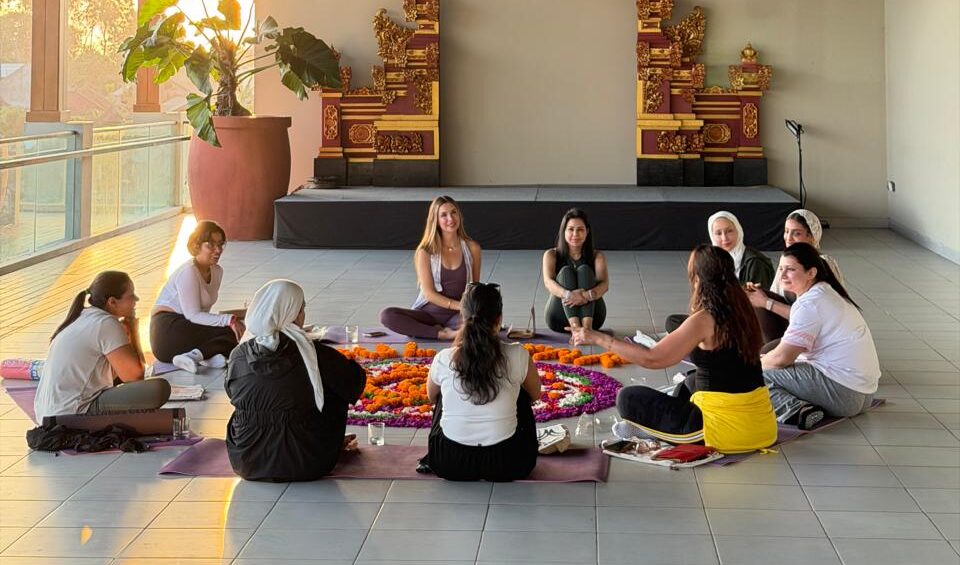
There is the quiet greenery of Ubud, where the journey begins with grounding and stillness — meditation among the trees, yoga by the river, and the water purification ritual at Tirta Empul Temple, where you leave behind what no longer belongs to your old chapter.

Then the scene shifts to Nusa Dua, where turquoise waters and white sands open your heart to the horizon, after it has already rooted itself into the earth.

In Bali, you learn to cook with the people of the island, laugh through a rafting adventure on the Ayung River, free yourself in the meditative dance session “Soul Star Dance,” and listen deeply during sound healing sessions that soothe the tension that has been weighing on you.

Bali is a journey that moves like the sunrise:

You arrive in the dark.
You breathe.
You release what no longer serves you.
Joy awakens your heart.
Then you rise again — carrying the light back home with you.

Bali will remind you who you are, what you deserve, and the person you are capable of becoming.

Bali is for you if you are standing at the beginning of a new chapter, longing for a journey that combines deep reflection, the magic of tropical nature, and luxurious accommodation.

Zanzibar: Where the Sea Meets the Rhythm of Africa

For women and men

If Bali is a green whisper, then Zanzibar is a warm heartbeat.

An island in the heart of the Indian Ocean, where white beaches blend with rich African culture, turquoise waters meet the rhythm of local drums, and every moment feels alive.

Zanzibar is a destination for those seeking an experience filled with vitality and adventure — without losing its spiritual depth.

What makes Zanzibar different?

Zanzibar brings together what rarely comes together: stillness and adventure in one journey.

Your days begin with morning rituals — movement, meditation, and group reflection — before opening into unforgettable experiences:

A “Blue Safari” boat trip with a barbecue on the sandbank, a visit to the hidden Kuza Cave, a drumming experience with a local band, and sunrise yoga sessions on the beach every morning.

And Zanzibar carries a deeply human touch that makes it special: visiting a local school and distributing gifts and supplies to the children — a moment that reminds you that giving is also part of healing.

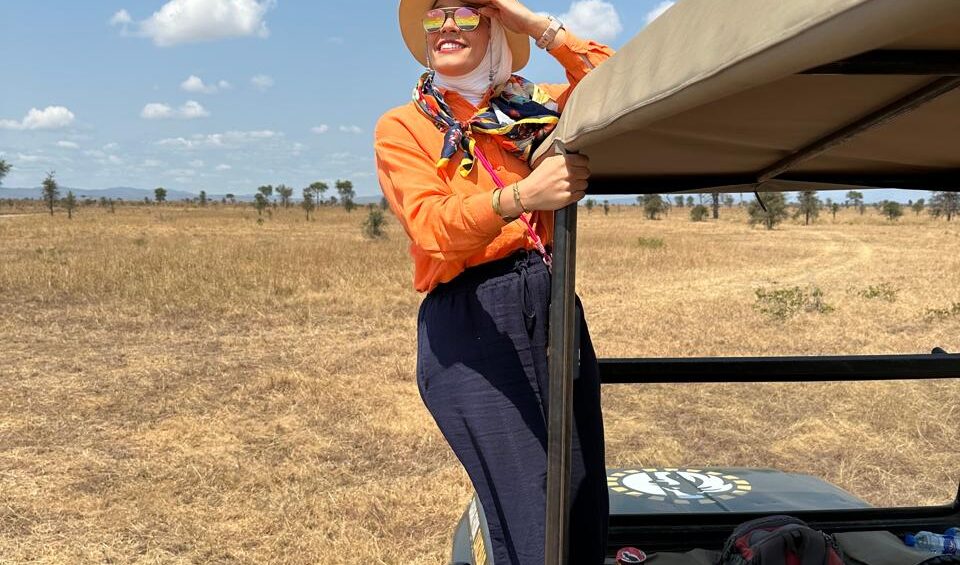
For those who wish to continue the adventure, the journey ends with an extraordinary experience: Mikumi Safari, where you witness African wildlife from a 4×4 jeep — a memory that stays with you forever.

Between Yoga Nidra sessions for deep rest, the “White Stars Night” for heart-opening, and sound healing sessions, Zanzibar offers a rare balance between living deeply and living joyfully.

Zanzibar is for you if you are looking for a journey full of life, adventure, and cultural discovery — with enough space for reflection and stillness.

Which Destination Is Calling You?

It is not about which one is better — both will take you back to yourself.

The real question is: which path speaks to your heart right now?

If you are longing for deep calm, grounding, and spiritual rituals surrounded by greenery and temples — Bali is waiting for you.

And if your heart is asking for vitality, adventure, and cultural discovery with a touch of stillness — Zanzibar is calling you.

In both journeys, you will not be alone.

You will be surrounded by people who feel familiar to your soul, in a safe and warm environment, guided by Salah and Dua from the moment you arrive until the moment you say goodbye.

A Final Message

Both islands are waiting for you.

But the real question is not about them — it is about you:

Are you ready to give yourself, even just once, a journey where you do not have to give to anyone else… but simply receive everything?

Eight days.
No roles.
No responsibilities.
No one needing you except yourself.

You arrive tired from carrying everything…
and return radiant.

Begin your journey back to yourself — discover our destinations in Bali and Zanzibar, and join us.
https://soulstarretreats.com/zanzibar-retreat-fnl
https://soulstarretreats.com/bali-retreat-fnl/

The Tired Feminine

Why does the Arab woman drain her energy in roles she never chose? And how does a retreat bring her back to her original self?

There is a kind of tiredness that sleep cannot heal.

A tiredness a woman wakes up from as if she had not slept at all. She opens her eyes to find a long list of tasks waiting for her before she even drinks her coffee. A child who needs her, a husband who is waiting, a mother calling, work chasing her, a home demanding her attention, and a society watching.

She gets up. She smiles. She gets things done.

And at the end of the day, when she sits alone for a few brief minutes, a strange feeling rushes in — one she does not dare to name:

“I no longer know who I am after all of this.”

This is not depression.
It is not weakness.
It is not a lack of gratitude.

This is what we call: the tired feminine.

The roles we never chose

Since childhood, the Arab woman receives her roles the way one receives an inheritance: without being asked whether she wants it.

She is raised to be a “good wife,” then a “perfect mother,” then a “dutiful daughter,” then a “loving sister,” then a “loyal friend,” then a “hardworking employee,” then a “strong woman who does not break.”

At least seven roles in a single day, moving between them with the smoothness of a professional.

But no one ever asks her:

Who are you when you take off all these roles?

And because no one asked, she stopped asking herself.

This is where the silent disaster begins: when a woman lives an entire life without meeting herself even once.

Why is our tiredness different?

The tiredness experienced by the Arab woman is not ordinary tiredness. It is a layered exhaustion made up of three levels:

The first layer: physical exhaustion.
Long hours of giving, interrupted sleep, rushed meals, and a nervous system in a constant state of alert.

The second layer: mental exhaustion.
A mind that never stops planning, remembering, worrying, and apologizing. A woman carries invisible lists in her head, and responsibilities that are not counted in any budget.

The third layer — and the most dangerous one: identity exhaustion.
To live every day as someone else, and gradually forget the features of the person you were before all these roles. To look in the mirror and see a woman you recognize by name, but no longer know what she loves, what brings her joy, or what makes her feel alive.

This kind of tiredness cannot be healed by a short vacation, a cup of tea on the balcony, or ten hours of sleep.

Because it is not tiredness from work.
It is tiredness from being absent from yourself.

What happens when you keep going?

A woman who continues giving without returning to herself passes through three silent stages:

First: she loses feeling.
She no longer feels joy the way she used to, nor sadness the way she used to. Her emotions become muted, and her days begin to look the same.

Second: she loses desire.
She no longer knows what she wants to eat, where she wants to travel, or what she wants to do with her free time — if free time even exists.

Third: she loses her voice.
Her inner voice becomes so quiet that she can no longer hear it. She begins living according to other people’s expectations, measuring her success by their standards, sleeping and waking to their rhythm.

And here, even if she appears “fine” from the outside, she has actually lost the most important relationship in her life: her relationship with herself.

A retreat is not a luxury. It is a return.

Many women believe that a retreat is a luxurious trip, a fancy vacation, or “too much self-indulgence.”

But the truth is much deeper than that.

A retreat — when designed consciously — is the only space in the life of an Arab woman where nothing is required from her.

No one is waiting for food from you.
No one is waiting for you to reply to a message.
No one needs your opinion on a decision.
No one is evaluating your performance as a mother, wife, or daughter.

For the first time in years, you are simply you.

And in this sacred emptiness, something happens that does not happen anywhere else:

Your nervous system begins to calm after years of being on alert.
Your body starts to remember how to breathe deeply.
Your inner voice becomes audible again — first as a soft whisper, then as a clear conversation.

And you meet, perhaps for the first time in a long while, the woman you were before all the roles.

How does a retreat bring you back to your original self?

Your original self is not a lost person.
She is a forgotten person buried beneath layers of expectations.

A retreat does not create a new self for you — it removes what is not truly you.

Through practices of silence, meditation, yoga, conscious breathing, and body-based practices that release the memory of exhaustion, you gradually begin to:

Distinguish between what you truly want and what you were taught to want.

Reclaim your ability to say “no” without guilt.

Rediscover what brings you joy — not as a mother or a wife, but as a woman.

Build a new relationship with your body, one based on listening instead of ignoring.

Return to your home, your family, and your work — but this time, with yourself by your side.

A final message

If you are reading this now and feel something moving inside you, know that this is not a coincidence.

It is your inner voice, the one that has been patiently waiting for you to turn toward it.

You do not have to be strong all the time.
You do not have to be everything for everyone.
You do not have to prove anything to anyone.

You deserve to return to yourself.
Not because you are exhausted, but because you exist.

And the return begins with one decision.

Do you feel that the time has come to meet your original self?

Day one is the Hardest

And that is exactly how you know you are in the right place.

No one tells you this before a retreat.
That you may arrive and feel strange. That the first hour might be harder than you expected. That maybe — at some moment — you will wish you had never come.
Everyone talks about the transformation. The beauty. The friendships. How they came back different.
But no one talks about day one.
We will.

What happens when you arrive

The suitcase on the floor. A new room. Unfamiliar faces. And suddenly — the voice appears.

“Why did you come?”
“It would’ve been better if you stayed home.”
“There’s no time for this.”
“They need you.”

That voice has nothing to do with the place. Or the people. Or the program. It is your own voice — the part of you that became so used to movement, responsibility, and constant doing that it forgot how to stop.

When you suddenly stop everything, that part becomes anxious. Not because stopping is wrong. But because it is unfamiliar.

Feeling strange is not a bad sign

We know this feeling well.

The woman who stood at the airport thinking about going back. The one who sat in her room on the first night sending messages home every hour. The one who smiled in the first gathering while, inside, she still felt somewhere else.

This is not failure. This is transition.

A body that has spent years producing, giving, and constantly showing up — needs time to believe it is finally allowed to rest. And at first, that process feels like tension. Anxiety. Sometimes even regret.

But in reality — it is something entirely different.

This feeling actually has a name

Some psychologists call it “transition shock.”

It is what happens when you suddenly move yourself from a high-pressure environment into a peaceful one.

The nervous system — which may have been operating in survival mode for months or years — cannot calm down on command. It needs time to believe the danger is over. That nothing is waiting. That it is finally allowed to breathe.

That tension on the first day?
It is your nervous system beginning — slowly and with difficulty — to let go.

And that is exactly how you know you needed this.

What changes — and when

Not on the first day.

On the first day, you simply arrive. Sit at the table. Eat. Try. Maybe laugh a little despite yourself. Maybe meet someone who feels a little like you.

On the second day: the room feels less unfamiliar. The faces begin to turn into names and stories. Your body starts noticing that the air feels different here.

On the third day: something softens. You cannot quite explain what it is — but you feel it. Conversations become deeper without trying. Silence becomes comforting instead of frightening.

By the fifth day: you begin wondering how you ever lived without this.

What we say to anyone feeling this

If you are in the first day of a retreat right now — or even imagining what it might feel like — we want to tell you one thing:

Stay.

Not because it becomes easy immediately. But because this discomfort you are feeling is the first real sign that something inside you is moving.

A tree that has not been watered for a very long time — when water finally reaches it, the first thing that happens is not blooming. The first thing that happens is the soil cracks open. And at first glance, that can look like destruction.

But it is the soil opening.

What people who experienced this have said

“On the first day I cried in my room. I didn’t even understand why. On the seventh day, I cried because I didn’t want to leave.”

“I felt like I didn’t belong. By the third day, they became some of the closest people in my life.”

“I wanted to turn back at the airport. Now this is my third retreat. I can’t imagine what my life would look like if I had gone home.”

These are not exceptions.
This is the pattern.

One final message

The first day is hard because you need this more than you realize.

Because someone who needs nothing feels nothing when they receive it.

But someone who has been deprived of peace for a very long time — their body trembles when it finally touches it.

That trembling is the sign.

Do not interpret it as something wrong.
Interpret it as a beginning.

Soul Recharge — Ölüdeniz, Turkey · May 22–28, 2026
If you are reading this and wondering — we are here. 🤍

We Were Never Taught How to Rest

Why Arab women need a retreat more than anyone else — and why so few of them allow themselves to have one.

There is a question that comes up on every Soul Star journey — usually on the third day, after the silence has started doing its work.

One of them sits quietly, eyes on the horizon, and says:

“I’ve been giving my whole life. Why is it so hard for me to receive?”

That question is not weakness. It is the result of years of being raised in a particular way of existing — one that honors giving and quietly diminishes need. We are not speaking critically about any culture here. We are speaking with love about something real that we witness every single day.

The Role That Never Ends

The Arab woman typically carries more than one identity at the same time.

Daughter. Sister. Wife. Mother. Employee. Friend. Daughter-in-law. Homemaker. And who knows what else.

Every role has its demands. Every demand has its expectations. And expectations do not take days off.

The problem is not in these roles themselves — they are all beautiful when lived with awareness. The problem happens when a woman loses track of who she is outside of these roles. When the question “what do you want?” becomes an embarrassing one — or worse: a question she has no answer to.

We hear it often: “I don’t know what I want. I just know that I’m tired.”

That tiredness has a name. It has a cause. And it cannot be cured by sleep, a vacation, or finally finishing the to-do list.

Admitting a Need — The Crime You Never Committed

There is something in our culture that is both beautiful and quietly difficult: strength is honored, giving is celebrated, patience is a virtue.

And all of these are real and worthy values.

But on the other side — need is sometimes read as weakness. Asking for help requires courage. And speaking about inner exhaustion is sometimes met with “alhamdulillah, others have it harder.”

So a woman learns — slowly, without noticing — to hide her needs. To swallow them. To compensate by achieving more, giving more, smiling wider.

Until denial becomes normal. And exhaustion becomes the default setting.

And what hurts most?

Many women only feel their tiredness when they stop moving. Because constant movement is the only way they were ever taught to manage what is inside them.

Why a Retreat — and Not Just a Regular Holiday?

When you go on holiday, you take everything with you. Your phone. Your worries. Your to-do lists. Your entire identity with all its roles intact.

A holiday changes the location. A retreat changes the state.

The difference is not in the program or the activities — it is in the space that is intentionally created:

Space to be yourself — without an external definition No one here knows you as “so-and-so’s mother” or “so-and-so’s wife” or “the department head.” You are simply you. That sounds simple — but for those who have never experienced it, it changes everything.

Space for real silence Not the absence of noise — but internal silence. When the to-do list in your head finally quiets down. When you hear your own voice, perhaps for the first time in a very long time.

Space for women who understand you This is what every woman who has traveled with us says: the biggest surprise was not the destination. It was the women. The ones she did not know and who became her closest friends. The ones who understood without explanation. Because they carry the same thing.

What Actually Happens at a Retreat

We do not promise dramatic transformation. We do not promise that everything will change.

But this is what we see — again and again — on every journey:

On the first day: a quiet nervousness. A feeling of strangeness. Perhaps even a wish to go back. This is completely natural — it is the first time in a long while that she has allowed herself to stop.

By the third day: something begins to loosen. The conversations go deeper. The laughter comes easier. The body starts to remember how to breathe.

On the sixth day: one of them says something she has not said in years. Not because anyone asked — but because the space gave her permission.

On the last day: the suitcase is packed. But something has shifted — not always visibly. Sometimes it is simply clarity. Clarity about what she wants. About what she no longer wants. About who she is outside of all the roles.

“I came back knowing myself more. And that is what lasts.”

One woman said it. And half the room cried — because she said what was in all of their hearts.

A Final Word — Not a Booking Invitation

This is not an advertisement.

It is something we genuinely want to say to every woman who reads this:

Taking care of yourself is not selfishness. It is the essential condition for becoming everything you want to be — for yourself first, and for those you love second.

Admitting a need is not weakness. It is the first step in the right direction.

And claiming space for yourself is not running away. It is courage.

If you are reading this and your heart is saying “this is me” — you are not alone. You are not exaggerating. What you feel is real.

At Soul Star, we don’t sell retreats. We create space.

Explore Our Upcoming Retreats here:
https://soulstarretreats.com/links/

Fear of travelling alone

The Real Reason Women Talk Themselves Out of What They Need Most

The page had been open on her screen for three weeks.

The retreat page. The dates. The price. She read it. Closed it. Opened it again. Told herself she’d think about it. And opened it one last time at eleven at night — after everyone in the house had gone to sleep.

Then she talked herself out of it.

We know this because we hear it every single time — after she finally books, after she comes back, after she sits in a circle of women she didn’t know a week ago and wonders why she waited so long.

“She almost didn’t come.”

This is one of the sentences we hear most often at Soul Star — and it hurts every time. Not because she was late. But because of everything she almost missed.

The Voice That Says “Not Yet”

There is a very specific internal voice that activates the moment a woman considers doing something entirely for herself.

It doesn’t sound like doubt. It sounds like logic.

It says: the timing isn’t right. It says: what about the kids? The work? What will people think? It says: I’ll do it next year when things settle down. It says: maybe I don’t deserve this yet — I haven’t earned it.

This voice is sophisticated. It arrives dressed as responsibility. As practicality. As maturity.

But we’ve sat with hundreds of women by now. And we’ve noticed something: this voice reaches its peak precisely when the thing you’re considering is the thing you need most.

The Five Things She Told Herself

After years of conversations with women who almost didn’t come — and then did — we’ve mapped the most common thoughts that nearly stopped them.

1. “What if I don’t connect with anyone?”

This is the most common fear. The image in her mind: sitting at dinner, surrounded by strangers, feeling alone in a room full of people. Being the odd one out. Not belonging.

Here’s what actually happens: when you bring a small group of women into an honest environment — not a networking event, not a tour group, but a space where pretending is more exhausting than being yourself — something shifts in the first 24 hours. Not because of chemistry. Because of context.

The women you’ll meet aren’t there to impress anyone. They’re there for the same reason you are. That shared honesty creates a depth of connection that most people don’t experience in years of friendship.

2. “I’m not spiritual / flexible / ready enough”

She imagines yoga at sunrise, everyone in perfect form, and herself falling over. She’s never meditated consistently. She’s never done yoga. She’s not sure she believes in any of this.

The truth: most women who travel with us have never meditated consistently. Many have never done yoga at all. Some describe themselves as “not spiritual in the slightest.”

A retreat is not a test. It’s not a performance. There is no advanced level you need to reach before you’re allowed to rest.

3. “The timing is terrible”

There is a woman who has been saying “the timing isn’t right” for four years. We have met her many times. She has a different name each time.

The timing will never be right. Work will always be there. Responsibilities don’t have an off-season. The question isn’t whether the timing is perfect — it’s whether you’re willing to wait for perfect while slowly burning out on good enough.

The women who come are not the ones with empty calendars. They’re the ones who decided they couldn’t afford not to.

4. “What if I spend all this and nothing changes?”

This is the fear beneath the other fears. Not the money itself — but the vulnerability of hoping for something and not getting it.

We can’t promise transformation. No honest retreat can. What we can tell you is this: not a single woman has come back unchanged. Not because we did something to her. But because seven days of genuine stillness, honest conversation, and being truly seen does something that cannot be undone.

You don’t leave the same. You leave knowing yourself a little more clearly. And that — as it turns out — is worth quite a lot.

5. “I should be able to do this on my own”

Perhaps the most quietly damaging belief of all. The idea that needing a dedicated space to rest is weakness. That real strength means being fine without any of this.

Athletes have coaches. Surgeons take breaks. The most capable people on earth are not the ones who need nothing — they’re the ones who know exactly what they need and make sure they get it.

Choosing a retreat isn’t admitting you’re broken. It’s acknowledging that you’re worth taking care of.

What “Not Yet” Actually Costs

We talk a lot about the cost of going. The money. The time away. The logistics.

We rarely talk about the cost of not going.

Another year of running on empty. Another year of giving to everyone while quietly disappearing. Another year of telling yourself you’ll slow down when things calm down — and things never calm down.

The women who almost didn’t come — the ones who booked at the last minute, who almost let the payment deadline pass, who nearly convinced themselves to back out entirely — they are, without exception, the ones most grateful that something in them didn’t listen to the voice.

A Letter to You

You’ve been thinking about this for a while.

Maybe weeks. Maybe longer. Something in you keeps coming back to it — keeps reopening the page, keeps imagining what it might feel like to have seven days that belong entirely to you.

Then the voice arrives. Practical. Reasonable. Dressed as wisdom.

We want to say something gently: the part of you that keeps coming back to this page is not being unreasonable. It’s not being selfish. It’s not confused.

It knows something the logical voice doesn’t want to admit: that you deserve the same care you give to everyone else in your life.

You don’t have to be ready. You don’t have to have the perfect reason. You don’t have to have everything figured out.

All you have to do is decide that this time, you’re not going to talk yourself out of it.

Soul Recharge — Ölüdeniz, Turkey

May 22–28, 2026. Seven days between the mountains and the turquoise sea.

Just three hours from most cities in the Gulf. Everything included — accommodation, meals, activities, and transfers.

If something in you just said yes — we’d love to hear from you.

Check our Retreat here:
https://soulstarretreats.com/turkey-fnl/

How to Choose the Right Retreat for Your Personality? (A Practical Guide to Making the Right Decision)

In recent years, the concept of retreats (wellness journeys) has become increasingly popular. But with this rise, a clear issue has emerged:
Many people attend retreats… without experiencing the real impact they expected.

The reason isn’t the quality of the experience itself, but rather a key point that is often overlooked:
Not every retreat is suitable for every person.

Choosing the right retreat doesn’t depend only on the destination or the program. It starts with a deeper understanding:
Who are you right now? And what do you truly need?

Why Does the Impact of a Retreat Differ from One Person to Another?

A retreat is not a traditional vacation—it’s an experience designed to create inner transformation.
And that transformation depends directly on how well the experience aligns with your current emotional state and needs.

Someone might choose a retreat full of activities when they actually need stillness.
Another might attend a relaxation retreat while they’re truly searching for deeper answers and direction.

That’s why the most important question before choosing any retreat is:
What do I need at this stage of my life?

Personality Types & the Right Retreat for Each

1. The Burned-Out Personality (Seeking Balance)
If you experience constant stress, overthinking, and difficulty relaxing—even during vacations—you likely need:

* A calm retreat
* A natural environment
* A program focused on regulating the nervous system

Here, the goal is not to “do more,” but to pause and restore balance.

2. The Clarity Seeker
If you feel confused, are going through a transition, or are searching for direction,
you need:

* Guidance and awareness sessions
* Deep conversations
* Space for reflection and decision-making

This type of retreat doesn’t just offer rest—it helps you understand yourself on a deeper level.

3. The Community-Oriented Personality
If you gain energy from connecting with others and grow within supportive groups,
you need:

* A strong group environment
* Shared activities
* Genuine human interaction

Here, the experience is not just about the place—but about the people and shared energy.

4. The Emotional Personality (Seeking Release)
If you carry suppressed emotions or feel an inner heaviness,
you need:

* A safe space to express yourself
* Emotional release sessions
* Support without judgment

This type of retreat offers you an opportunity for release—not just relaxation.

5. The Explorer Personality
If you love change, new experiences, and nature,
you need:

* A balance between calm and adventure
* Diverse activities
* An inspiring and refreshing environment

Here, the retreat becomes a holistic experience blending life and awareness.

The Common Mistake When Choosing a Retreat

Many people fall into the trap of choosing based on surface-level elements like:

* The destination
* Photos
* Price

But the truth is:
The most beautiful place in the world won’t create a meaningful experience… if it’s not right for you.

The right choice starts from within, not from the outside.

A Balanced Experience: Depth Meets Comfort

In reality, it’s rare to find a retreat that combines:

* Calmness without isolation
* Depth without pressure
* Connection without losing personal space

And this balance is what sets certain thoughtfully designed experiences apart.

Oludeniz Retreat – Turkey

📍 22-5-2026

This retreat offers a complete experience that combines:

* Unique nature between sea and mountains to help restore balance
* Awareness and guidance sessions with Salah Amireh
* A safe and supportive space led by Dua Hindi
* A balance between relaxation and adventure
* A human-centered environment that encourages authenticity and expression

This experience is designed for those seeking calm without withdrawal, depth without complexity, and connection without pressure.

Is This Retreat Right for You?

If what you’ve read reflects part of your current needs,
this might be the right time to take a different step.

In Conclusion

Choosing a retreat is not a random decision—it’s an investment in your inner experience.
The goal is not to attend just any retreat…
but to choose the one that can truly make a difference in your life.

In the end, the answer isn’t in the place but in how honest you are with yourself about what you truly need.

Discover the Oludeniz Retreat here
https://soulstarretreats.com/turkey-fnl/

Explore upcoming retreats with Soul Star here
https://soulstarretreats.com/links/

Seven Signs You Need a Retreat

In a world that never slows down, where responsibilities and daily pressures keep piling up, many of us live in a state of chronic exhaustion without even realizing it.
We keep giving, working, achieving — but rarely pause to ask ourselves: Are we truly okay?
This is where the value of a retreat lies.

What is a Retreat? And How is it Different from a Traditional Vacation?
A retreat — or wellness journey — is not just a relaxing holiday or a leisure trip.
It is a carefully designed experience that combines travel, self-discovery, and transformational practices such as yoga, meditation, and group sessions.
In a traditional vacation, you may change your location, but you carry the same thoughts, the same stress, and the same patterns with you.
In a retreat, you intentionally create space for real change — in a supportive environment, surrounded by like-minded people, and guided by professionals who walk with you through the journey.

What Does Science Say About Wellness Practices?
Retreat practices are not just a modern trend — scientific research confirms their real benefits:

Yoga & Meditation: Studies show that regular practice reduces cortisol (the stress hormone), improves sleep quality, and enhances focus and mental clarity. Research published in the American Psychological Association found that people who meditate regularly report higher levels of life satisfaction.

Sound Healing: This method uses sound vibrations to bring the body and mind back into balance. Research from Massachusetts General Hospital suggests that certain sound frequencies can activate the body’s relaxation response.

Nature & Mental Health: Japanese studies on Shinrin-yoku (forest bathing) show that spending time in nature lowers blood pressure, reduces stress, and boosts immunity. Walking in the mountains or swimming in the sea is not a luxury — it is real therapy for the human body.

Group Sessions & Human Connection: Psychologists have found that feeling part of a supportive group is one of the strongest factors in improving mental well-being. Many psychological struggles are linked to isolation — and retreat group sessions create a safe space to break through that.

When Do You Need a Retreat? — 7 Signs to Look For
You may need a retreat if you notice the following:

You feel constantly exhausted despite getting enough sleep

You struggle to stop overthinking

You’ve lost passion for things that once excited you

You feel disconnected from yourself or your loved ones

You find it hard to set boundaries or say “no”

Life feels like it’s on autopilot without real meaning

You’re craving change but don’t know where to start

If you recognize yourself in any of these, you deserve space to pause and restore.

Oludeniz — Why It’s One of the Best Wellness Destinations in the World
Oludeniz in Turkey is not just a beautiful tourist destination — it’s an exceptional natural environment where everything aligns for deep healing:

The turquoise sea, home to the famous Blue Lagoon, one of the clearest waters in the Mediterranean

Butterfly Valley, one of Turkey’s most breathtaking protected natural areas

Fresh air and open skies that create a sense of freedom away from city noise

The famous Lycian Way, one of the world’s most stunning hiking trails, blending nature with rich history

When the beauty of the place meets the depth of the inner experience, something extraordinary happens — a journey that stays within you long after you return.

What to Expect After a Retreat — Real Transformations
Participants in wellness retreats consistently report meaningful changes:

Greater mental clarity and improved decision-making

Noticeable reduction in anxiety and daily stress

Stronger relationships with themselves and others

Practical tools to manage life’s pressures (yoga, meditation, journaling)

Deep friendships with like-minded people

Rediscovering passion for life

Transformation doesn’t happen by chance — it happens when you create space for it.

Final Words
In a time where simply pausing requires courage, at Soul Star Retreats we believe that investing in yourself is the deepest investment you can make.
A wellness retreat is not a luxury for the few — it is a right for anyone who wants to live with awareness, gratitude, and depth.

Are you ready to recharge your soul?
“Recharge Your Soul” Retreat — Oludeniz, Turkey
May 22 – 28, 2026 | 7 days between mountains and sea
Join us for an extraordinary retreat with Salah Amireh and Dua Hindi in the heart of Oludeniz’s magical nature.
Seven days of yoga, meditation, sound healing, adventure, and real human connection — everything you need to return to yourself and come back to life with a calmer heart.
Limited spots available
Register now and explore full details:
soulstarretreats.com/turkey-fnl

A retreat in a time where events are rapidly accelerating

In a time where events are accelerating faster than our ability to process them, stress is no longer a temporary response—it has become a constant state we live in every day.
We wake up to heavy news, spend our days navigating life’s pressures and responsibilities, and return in the evening carrying a vague sense of anxiety or exhaustion—even when there is no clear or direct cause. This feeling is no longer the exception; it has become part of the rhythm of modern life.

Wars, crises, political tensions, economic pressures, and even the constant noise of social media… all contribute to what is known as chronic nervous system activation. In other words, our nervous system remains in a constant state of alert, as if danger is always present—even when it’s not.

And here lies the real problem.

The human body was not designed to stay in this state for long periods. When the nervous system remains in “survival mode,” symptoms begin to appear: constant fatigue, difficulty focusing, sleep disturbances, and mood fluctuations. Even worse, we may become so accustomed to this state that we forget what true calm actually feels like.

Many people try to cope with this pressure through temporary distractions—a quick trip, shopping, or even a traditional vacation. While helpful, these are often surface-level solutions. They don’t address the root cause; they simply offer a short break before returning to the same cycle.

This is where the concept of a retreat emerges as something entirely different.

A retreat is not just travel or relaxation—it is a conscious, intentionally designed experience that creates a safe space for you to pause, rebalance, and reconnect with yourself. It’s a shift from consumption to awareness, from noise to stillness, and from distraction to presence.

The core idea of a retreat is to take you out of your usual environment and place you in one that actively supports your inner calm. An environment where every detail—from the location to the activities—is designed to serve you mentally and physically, rather than drain you.

One of the destinations that truly embodies this concept is Oludeniz in Turkey.

Oludeniz is known for its unique natural beauty, where crystal-clear turquoise waters meet lush green mountains, creating a sense of calm that’s hard to describe in words. This natural balance between sea and mountains creates the perfect setting to soothe the nervous system and reconnect with your senses.

But the real value lies not only in the place itself, but in the experience built within it.

In a retreat, the day unfolds differently. You might begin with a gentle yoga session that reconnects you with your body, followed by meditation to quiet the mind, and journaling practices that open space for expression and deeper understanding.

Throughout the day, you may engage in activities such as mountain walks, boat trips, or simply sitting by the sea with no purpose other than to be. These simple moments carry a profound impact—they retrain your nervous system to feel safe without external stimulation.

Another essential element of a retreat is the safe space.

It is an environment where you feel free to be your authentic self—without judgment, pressure, or the need to appear strong or in control. Whether through group or individual sessions, this space allows for inner healing processes that rarely occur in everyday life.

Most importantly, a retreat is not about escaping reality—it’s about preparing you to return to it in a better way.

When you take real time to rebalance, you become more capable of handling stress, clearer in your decisions, and more connected to yourself. This naturally reflects in your relationships, your work, and your overall perspective on life.

In a world that constantly demands you to be faster, stronger, and more productive…
perhaps the most courageous decision is to pause.

To give yourself permission to rest—not because you are weak, but because you are aware enough to recognize that continuing at the same pace is not sustainable.

And perhaps, in a quiet place like Oludeniz, that pause becomes the true beginning of a deeper return to yourself.

Explore our Retreat in Turkey

Turkey-fnl


When the world pressures you… how can you relax your nerves without escaping reality?

At certain times, you may feel tired, uncomfortable, or unable to focus— even though there is “no clear reason” in your life to justify it.

You wake up, go through your day, do what you have to do…
yet inside, there’s a subtle feeling of tension, or a heaviness you can’t explain.

The truth? Sometimes, the problem isn’t you… it’s everything around you.

The fast-paced news, general tension, life pressures, social media— all of these create a constant state of alertness… without us even noticing.

Why do we feel this way?

As humans, we are not separate from the world. Even if we are not directly involved in events,our nervous system is affected by everything happening around us.

There is something known as “collective stress” a feeling that affects many people at the same time, due to general circumstances, changes, or instability.

What actually happens in our bodies?

The human body is designed to protect us. But when it is exposed to continuous stress, it enters a state known as:

Fight or Flight

In this state, the body remains on constant alert, even when there is no real danger.

The common mistake

When we feel this tension, we often fall into one of these patterns:

Escaping (over-distraction or constant busyness)
Denial
Self-blame

But the truth is, the body doesn’t need more pressure— it needs calm.

How do you relax your nerves without escaping reality?

Calmness doesn’t mean ignoring reality. It means creating inner balance despite what’s happening externally.

Here are some simple ways:

Slow breathing
Take a few minutes daily to focus on your breath consciously.
Limit news exposure
Not by completely cutting off, but by being intentional.
Physical movement
Such as walking or light exercise to restore balance.
Express your emotions
Through writing or talking.
Make time for yourself
Even a few minutes daily away from distractions.
An important truth

Calmness is not a luxury… it is a skill.

And the more you develop this skill, the more stable you become—no matter how circumstances change.

“Relax Your Nerves” Program

The “Relax Your Nerves” program is designed to help you:

Understand your nervous system
Deal with stress consciously
Restore your sense of inner safety

Not by escaping reality, but by making peace with it.

In conclusion

The world may continue to apply pressure, but you always have a choice:

How you respond to that pressure.

Click here to learn more about the Relax Your Nerves program.

https://soulstar.life/erkhi-a3sabk-course