 English
  Arabic
Many people use the word “retreat” to describe any trip that includes calmness, nature, yoga, or meditation. But the truth is that a retreat is not just a beautiful vacation, it is not a replacement for therapy, and it is not simply a place you escape to when you feel tired.
A real retreat is a structured space that helps a person pause, observe, reconnect with themselves, and understand what is happening inside them away from the noise of daily life.
And because the word “retreat” has been used so often in recent years, it has become important to understand the difference between a retreat and a regular vacation, and the difference between a retreat and therapy.
First: What is a vacation?
A vacation is usually meant for rest, entertainment, a change of atmosphere, or spending enjoyable time away from routine.
You may travel to a beautiful place, sleep more, visit restaurants, take photos, swim, or spend time with people you love.
And that is something beautiful and important.
A vacation helps the body and mind step away from daily pressure. But it often does not go deeply into the real reason behind the exhaustion. It gives you a break from life, but it does not always help you understand why you reached this level of burnout in the first place.
That is why many people return from vacation feeling relaxed for a few days, then go back to the same stress, the same emotional reactions, the same overthinking, and the same feeling of pressure.
A vacation changes the place.
But it does not necessarily change your relationship with yourself.
Second: What is therapy?
Therapy is a deep professional space led by a licensed therapist or specialist. Its purpose is to understand psychological patterns, trauma, anxiety, depression, relationships, behaviors, and the deeper roots of inner pain.
Therapy is very important, and seeking therapy does not mean that a person is weak. On the contrary, therapy is one of the most mature and courageous steps a person can take.
In therapy, the focus is usually on individual or group sessions within a clear therapeutic framework, with a specialist who knows how to work with different psychological conditions in a safe and professional way.
But a retreat is not therapy, and it should not be presented as a replacement for it.
A retreat may support awareness, rest, inner regulation, and reflection, but it does not treat severe psychological conditions, and it does not replace follow-up with a specialist if a person needs therapy.
Third: What is a real retreat?
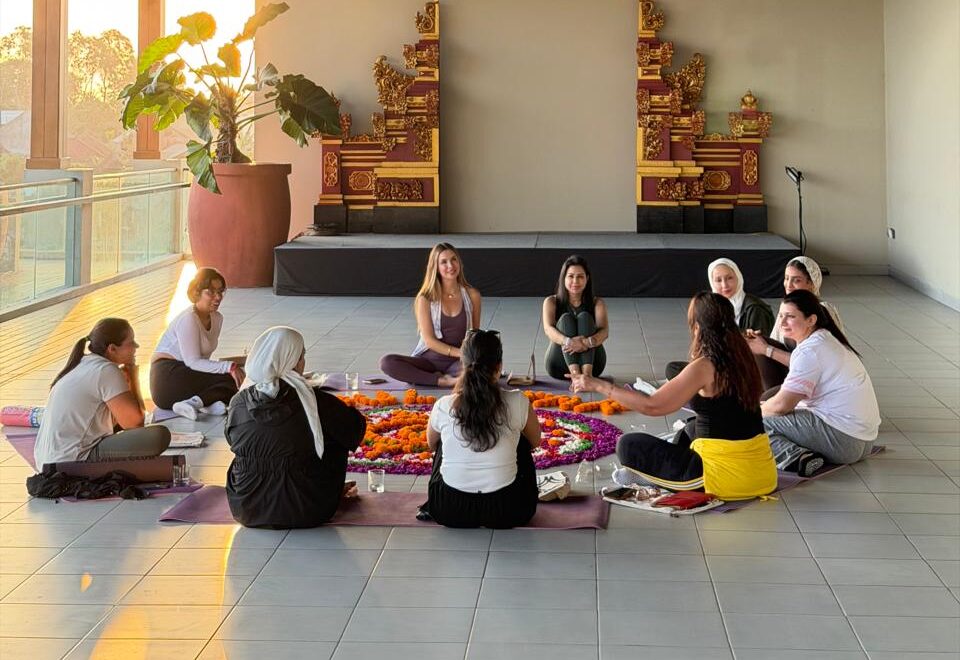
A retreat is a temporary and intentional experience where a person steps away from their daily life for a specific period of time and enters a space that helps them find calm, presence, learning, reflection, and inner movement.
The main difference is that a retreat is not just “travel.”
It is a designed experience.
This means that every part of it has a purpose:
the choice of place, the program, the sessions, the silence, the movement, the food, the sleep, the activities, the conversations, and even the empty spaces.
A real retreat does not simply fill your time with activities.
It gives you a chance to hear yourself again.
It does not tell you: “Run away from your life.”
It tells you: “Pause for a moment, and look at your life from a calmer place.”
How do you know that you do not just need a vacation, but a retreat?
You may need a retreat if you feel that the tiredness inside you does not go away with sleep.
If you take a holiday, but return with the same heaviness.
If you are always busy, but you do not really know what you want.
If you are surrounded by people, but you feel far away from yourself.
If you are strong all the time, but inside you need a space where you do not have to explain.
If you feel that your life is full, but not necessarily connected to you.
Here, the issue may not be that you need a nicer hotel or a farther country.
You may need a deeper space.
A space that does not ask you to produce.
Or reply to everyone.
Or prove anything to anyone.
Or be “okay” all the time.
The practical difference between a vacation and a retreat
On vacation, you choose what to do based on your mood.
In a retreat, there is a designed path that takes you from one state to another.
On vacation, the goal may be enjoyment.
In a retreat, the goal is awareness and returning to yourself.
On vacation, you may escape from your routine.
In a retreat, you notice the routine that drained you.
On vacation, the days may be filled with visits and plans.
In a retreat, empty space has meaning.
On vacation, you ask: “Where should I go?”
In a retreat, you ask: “What do I need to return to within myself?”
Is a retreat suitable for everyone?
Not always.
A retreat is suitable for someone who is ready to pause for a while, slow down, observe, and allow themselves to be present.
But it may not be suitable for someone who is only looking for a busy tourism program, or someone who does not want any kind of reflection or inner confrontation, or someone who currently needs specialized therapy for a deep or urgent condition.
A retreat is not an escape.
It is not therapy.
And it is not superficial luxury.
It is a space between all of that.
A space for conscious rest.
For breathing.
For restoring balance.
For learning from the body, from silence, from nature, and from the present moment.
Why do we need this kind of experience today?
Because we live in a very fast world.
We reply to messages quickly.
We move from one task to another.
We carry our phones all day.
We compare ourselves to others.
We run after achievement.
And we forget to ask ourselves one simple question:
“How am I, really?”
A retreat creates space for this question.
Not in a dramatic way.
Not in a complicated way.
But in a very human way.
You sit.
You breathe.
You walk.
You eat slowly.
You hear the sound of the sea or the air.
You pay attention to your body.
You notice what you have been postponing inside yourself.
And you begin to return to yourself, step by step.
Conclusion
A vacation gives you rest from the outside.
Therapy helps you do deep work with a specialist.
But a retreat is a conscious space between rest and discovery.
It is not a replacement for therapy, and it is not just travel.
It is a designed experience that helps you pause, understand yourself, and reconnect with what you had been forgetting in the middle of busyness.
So before you choose your next trip, ask yourself:
Do I only need a change of place?
Or do I need a space where I can hear myself again?
Maybe you do not need to run away from your life.
Maybe you only need a safe place where you can pause for a while… so you can return to it with more clarity, more calmness, and a deeper connection to yourself.
Explore our upcoming Retreats :