 English
  Arabic
Quiz: If Your Nervous System Were an Animal, Which Animal Would It Be Today?
Every morning, you wake up in a different state.
Sometimes you are calm, present, and able to deal with whatever comes your way. Sometimes you are tense before the day even begins, startled by the sound of your phone ringing, and you feel that your body is “tight” for no clear reason. And other times, you are… absent. You do what you need to do, but you are not really there.
What you may not know is this: each one of these states reflects the condition of your nervous system in that moment.
And the easiest way to understand it? Imagine it as an animal.
Because the nervous system, just like animals, operates through instinct. It responds to danger, searches for safety, enters hibernation when exhausted, and wakes up when it feels protected.
Come discover with us: which animal is living inside you today?
How to Take the Quiz
Answer the seven questions honestly — not based on who you think you “should” be, but based on who you truly are in this period of your life.
Count how many times you choose each letter: A, B, C, or D.
Then read your result below.
Question 1: When your phone suddenly rings, what does your body do?
- A) My heart jumps, and I feel immediate tension, even if it is a normal call.
B) I usually ignore it. I do not have the energy to answer.
C) I look at it calmly and decide whether I want to answer or not.
D) I answer quickly, even if I am not ready — as if I am afraid of disappointing someone.
Question 2: How do you wake up in the morning?
- A) Half an hour before the alarm, with my heart racing and a to-do list spinning in my head.
B) With great difficulty, as if my body does not want to get up, even if I slept for 9 hours.
C) Calmly. I stretch a little and begin my day at my own pace.
D) I jump up immediately because someone needs me — children, a husband, work — before I even drink water.
Question 3: In a difficult situation, such as a work problem or a family conflict, what is your first reaction?
- A) I immediately start analyzing and worrying, expecting the worst-case scenarios.
B) I freeze. I do not know what to do, so I postpone dealing with the situation.
C) I take a deep breath and think calmly before I act.
D) I act immediately to please everyone and end the tension as quickly as possible.
Question 4: At the end of the day, how do you feel toward your body?
- A) Tense, as if there is “electricity” running under my skin that does not stop.
B) Very heavy, as if my body does not belong to me.
C) Naturally tired, but I still feel connected to it.
D) I do not know. I did not notice my body all day.
Question 5: When you find yourself completely alone, with no tasks and no responsibilities, what happens?
- A) I feel a strange kind of anxiety. I do not know what to do with the emptiness.
B) I sleep, or I stare at the wall.
C) I enjoy it. I read, meditate, walk, or simply sit.
D) I look for something to do. I cannot stay “unproductive.”
Question 6: How is your relationship with your emotions during this period?
- A) Unstable. I cry quickly, get angry quickly, and worry quickly.
B) Numb. I do not feel intense joy or intense sadness. Everything feels “average.”
C) Connected. I know what I feel and why, and I know how to deal with it.
D) Unclear. I do not have time to feel — there is always something more important.
Question 7: If someone told you, “Take a one-week vacation and do nothing,” what is the first thought that comes to mind?
- A) “How? There are a million things waiting for me!”
B) “Maybe I would sleep for the entire week.”
C) “Oh my God, what a gift. I know exactly how I would spend it.”
D) “Who will take care of everything while I am gone?”
Your Results
Count the letters. The letter you chose most often is your animal.
If two or more letters are tied, read both results — you may be living between two states.
🦌 Mostly A — You Are “The Alert Deer”
Your nervous system is in a constant state of alert.
Like a deer in the wild, your eyes are always open, your ears catch every sound, and your body is ready to jump at any sudden signal — even when there is no real danger.
This is a chronic fight-or-flight state. Your body keeps releasing stress hormones as if it believes you are in a forest full of threats, while in reality, you may simply be sitting on your couch.
Physical signs:
Tense shoulders, a tight jaw, difficulty sleeping despite feeling tired, indigestion, and sudden waking between 2:00 and 4:00 a.m.
What your body needs:
Not more coffee. Not better time management. It needs strong and repeated signals of safety. A long exhale, slow movement, nature, silence, and for someone — anyone — to stop asking something of you for a few days.
The deer needs to remember that the forest is no longer dangerous.
🐻 Mostly B — You Are “The Hibernating Bear”
Your nervous system is in a freeze state.
A bear hibernates when the outside world becomes too harsh to handle. It closes the doors, slows down all body functions, and disappears from the world for months.
You do the same thing, but without entering an actual cave. You continue going to work, taking care of the house, answering messages — but a large part of you is “asleep.” You do not feel joy the way you used to, nor sadness, nor anything intense. Everything feels faded.
Physical signs:
Heaviness in the body, long sleep without feeling rested, feeling disconnected from your body, loss of appetite or overeating, and mental fog.
What your body needs:
Not more sleep — you have tried that, and it did not work. It needs a gentle reawakening. Slow movement, warm and nourishing food, sunlight on your skin, safe hugs, and for someone to touch your heart with honesty and remind you that you are still here.
The bear does not need to be forced to wake up. It needs a spring that gently invites it out.
🐱 Mostly C — You Are “The Relaxed Cat”
Your nervous system is in a healthy state of balance.
A cat knows when to sleep, when to be active, when to play, and when to stretch in the sun without guilt. It trusts its instincts, listens to its body, and sets clear boundaries without apology.
You are in a rare and beautiful state. This does not mean your life is free of challenges. It means your nervous system has learned how to return to balance after every storm.
Physical signs:
Deep sleep, steady energy throughout the day, belly breathing, the ability to truly relax, and a sense of connection with your body and emotions.
What your body needs:
To keep doing what you are doing. And not to take this state for granted — because life can disrupt it at any moment. Set regular time for your daily inner retreat: meditation, movement, nature, and healthy relationships.
The cat does not need treatment. It needs to protect the kingdom it has built.
🐝 Mostly D — You Are “The Working Bee”
Your nervous system is in a state of over-responsiveness to others.
The bee does not stop. It flies from flower to flower, from hive to hive, serving everyone and producing honey for others — but rarely tasting it herself.
You live to please the people around you. Your nervous system has tuned itself to other people’s signals and gradually lost the ability to hear your own. When are you hungry? When are you tired? What do you truly want? These are questions you may no longer ask yourself.
This state has a scientific name: the fawn response — the appeasing response. It is a form of stress response that is no less serious than fight or flight, but it is much more hidden because society often rewards you for it: “Wow, she is so easy to be around, so kind.”
Physical signs:
Chronic exhaustion without knowing why, feeling empty after every gathering, difficulty saying “no,” guilt when you take time for yourself, and recurring immune-related illnesses.
What your body needs:
To learn — perhaps for the first time — to listen to yourself before listening to others. To try saying “no” without explaining. To ask yourself every morning: “What do I need today?”
The bee deserves to taste her own honey before offering it to others.
What Now?
Whatever your animal is, know one thing:
This is not your personality.
This is the state of your nervous system today.
And states can change.
The deer can calm down.
The bear can wake up.
The bee can learn to rest.
And the cat can protect her balance.
But change does not happen through reading alone. It happens when you give your body an environment that allows it to return to balance.
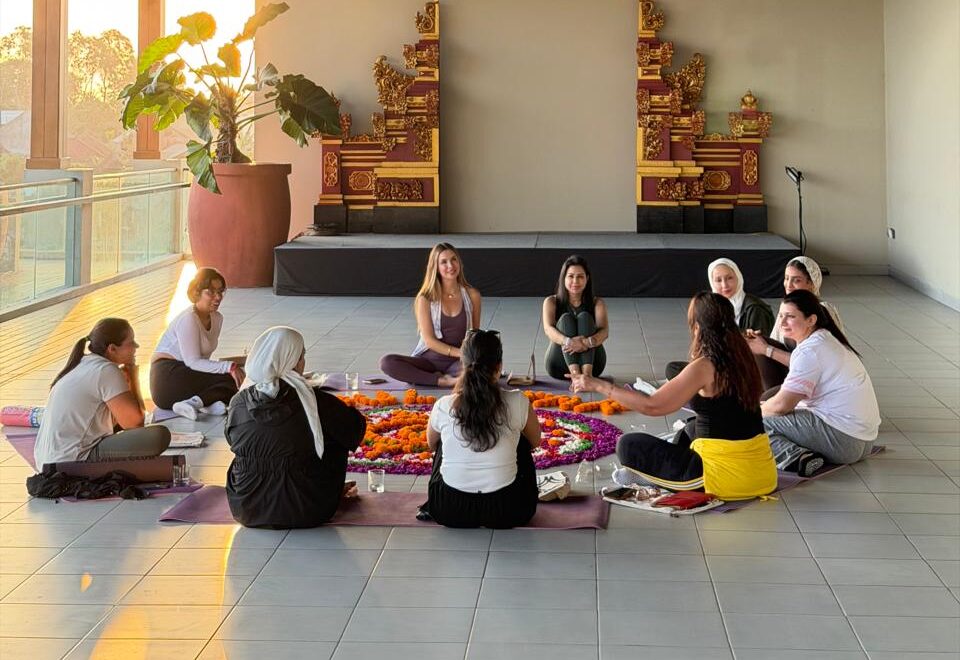
And this is exactly what a retreat does:
For the deer: a safe environment that takes her out of constant alert.
For the bear: warmth and gentleness that wake her up slowly.
For the bee: a space where she is not required to serve anyone.
For the cat: a new depth that takes her to a higher level of balance.
Eight days are enough for your body to remember its original animal — before life forced it to become something else.
Do you want to discover what your nervous system deeply needs and take the first step toward your balance?
Discover our upcoming retreats through the following link.
https://soulstarretreats.com/links/