 English
  Arabic
A Deeper Understanding of Two Experiences That May Seem Similar… Yet Are Fundamentally Different
In recent years, the term “retreat” has become widely used and is sometimes treated as a synonym for tourist trips or luxury vacations.
However, in reality, there is a profound and essential difference between a retreat and a traditional tourist trip — a difference that has nothing to do with the destination, the hotel, or the level of luxury, but rather with the nature of the experience itself, its intention, and the impact it leaves on a person’s life.
In this article, we clarify the core differences between a retreat and a tourist trip in terms of:
purpose, structure, rhythm, psychological impact, and transformational role.
First: Definition of a Tourist Trip
A tourist trip is a recreational activity primarily aimed at:
-
Changing the atmosphere
-
Exploration
-
Enjoyment
-
Breaking routine
-
Visiting new places
Tourist trips typically revolve around:
-
A packed schedule of activities
-
Constant movement between landmarks
-
Visits, restaurants, and shopping
-
Taking photos and documenting experiences
-
Adhering to strict time schedules
The main focus of tourism is outward:
What did you see? Where did you go? What did you experience?
It is undoubtedly a pleasant and enjoyable experience, but in most cases it does not create a lasting inner change in a person’s psychological state or lifestyle.
Second: Definition of a Retreat
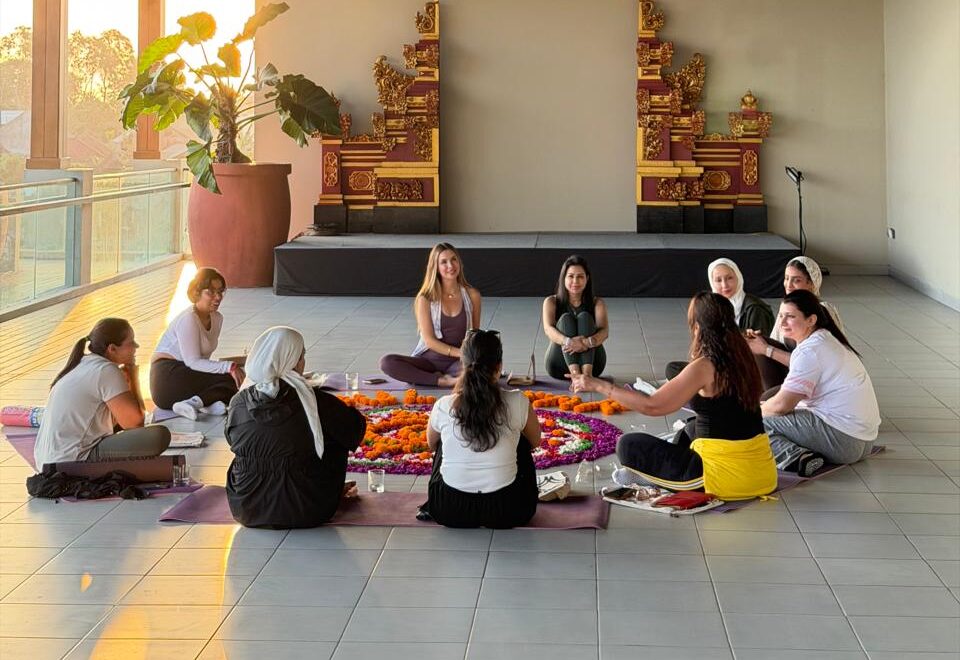
A retreat is an intentional experience, consciously designed, whose primary goal is not entertainment but returning to the self and restoring inner balance.
A retreat is not an escape from life.
It is a temporary space to step away from daily noise in order to reconnect with oneself in depth and stillness.
A retreat is typically characterized by:
-
A balanced, non-overloaded program
-
Spaces for silence and meditation
-
Awareness or personal development sessions
-
Conscious movement (yoga, breathing, mindful walking)
-
Free time without social obligations
-
A psychologically and emotionally safe environment
The focus of a retreat is inward:
How do I feel? What do I need? What am I avoiding hearing in my daily life?
Third: The Difference in Intention and Purpose
The greatest difference between a retreat and a tourist trip lies in the intention with which a person enters the experience.
The intention of a tourist trip:
-
Enjoyment
-
Entertainment
-
Changing the atmosphere
-
Collecting memories and photos
The intention of a retreat:
-
Calming the nervous system
-
Restoring balance
-
Inner clarity
-
Deep self-understanding
-
Making different decisions for the next phase of life
In a retreat, every element of the experience serves this intention:
the location, timing, number of participants, program, daily rhythm, and even periods of silence.
Fourth: The Difference in Rhythm and Time
Time is experienced very differently in each type of journey.
In a tourist trip:
-
Time moves fast
-
Constant movement
-
A crowded schedule
-
A persistent feeling that “there’s always something else we need to catch up to”
In a retreat:
-
Time is slow and intentional
-
Wide spaces for stillness
-
No rushing
-
No social obligations
-
No pressure to perform or achieve
This slow rhythm is not a minor detail.
It is a fundamental element in calming the nervous system and reorganizing emotions and thoughts.
Fifth: The Difference in the Psychological Structure of the Experience
A tourist trip keeps a person in a state of continuous external stimulation:
sights, sounds, movement, images, and information.
A retreat, on the other hand, works to:
-
Reduce external stimulation
-
Minimize distractions
-
Create a safe inner environment for reflection and healing
This allows the emergence of:
-
Delayed emotions
-
Unresolved thoughts
-
Important existential questions
-
Long-ignored psychological needs
Sixth: The Difference in Impact After Returning
Here is where the true difference becomes most visible.
After a tourist trip:
-
Beautiful photos
-
Pleasant memories
-
Light physical fatigue
-
Temporary longing for the place
But daily life often resumes exactly as it was before the trip.
After a retreat:
-
Noticeable inner calm
-
Greater clarity in decisions
-
Shifts in priorities
-
A more honest connection with the self
-
Improved sleep quality and mood
-
A sense of inner stability
Many participants in Soul Star retreats describe the experience as:
“A life reset point.”
Seventh: Why a Retreat Is Not for Everyone
Because a retreat requires inner readiness.
A retreat is suitable for those who:
-
Feel chronic inner exhaustion
-
Have lost connection with themselves
-
Live in a fast and draining lifestyle
-
Seek deeper meaning beyond entertainment
-
Are ready to sit with themselves honestly
Those who are only looking for amusement and a temporary escape from reality may find that a tourist trip is more appropriate for them at this stage
Conclusion
A tourist trip changes the place.
A retreat changes the person.
A tourist trip fills memory albums with photos.
A retreat fills life with clarity.
A tourist trip is a temporary break from routine.
A retreat is a reset of life’s direction.
At Soul Star Retreats,
we do not design trips.
We design safe spaces for returning to the self,
and for beginning a new chapter that is more conscious, honest, and balanced.
And if there is a quiet inner voice within you saying:
“I don’t need a vacation… I need a real pause,”
then perhaps a retreat is the step you are searching for 🤍
Check our Upcoming Retreats Here :